

How to Tell If Gold Is Real: 8 Home Tests and Their Limits


To tell if gold is real, read the stamp, try a magnet, then weigh and measure the piece against its official spec. A 1 oz American Gold Eagle is fixed by federal law at 33.931 grams and 32.7 mm across, so a coin that jumps to a magnet or comes in a gram light is not real gold. Passing is a weaker result than failing. Gold and tungsten have the same density, 19.3 g/cm³, and a gold-plated tungsten fake can clear the magnet, the scale and a water test at home. Home tests rarely catch one.
That's the honest shape of home testing. It rules out cheap fakes far better than it proves the real thing. Below are eight checks, roughly in order from harmless to destructive, with what each one can and can't tell you about jewelry, coins and bars.
Test | Catches | Still passes | Damages the piece? |
|---|---|---|---|
1. Stamp | Plating codes (GP, GF, HGE), stamps that contradict themselves | A copied stamp | No |
2. Visual check | Plating worn through, flaking, soft detail | A clean, fresh plating | No |
3. Magnet | Iron, nickel or steel inside | Brass, copper, lead, silver, tungsten | No |
4. Weight and size | A copy made of a lighter metal | Tungsten built to spec | No |
5. Density | Copper, silver and lead in 1 oz coins and bars | Tungsten; small coins and jewelry read unreliably | No |
6. Ping | Many base-metal coin fakes, next to a genuine coin | Anything your ear can't separate | No, if you tap with a pen, not another coin |
7. Streak | Base metal at the surface | Thick plating | Yes, it grinds metal off |
8. Acid | Lower karat or base metal where the acid touches | A heavy gold layer over tungsten | Yes, it leaves a scratch |
Read the gold stamp: karat marks, 585, 750 and plating codes
A stamp is a claim more than it is proof. Anyone with a punch can strike "14K" into brass. Still, it's the right place to start, because a stamp that contradicts itself, or says "plated" in code, settles the question in five seconds.
Karat and fineness stamps on gold jewelry
Karat counts parts of gold out of 24. The European-style number stamps give the same thing in parts per thousand:
Stamp | Gold content |
|---|---|
10K or 417 | 41.7% |
14K or 585 | 58.5% (14/24 works out to 58.3%) |
18K or 750 | 75% |
22K or 916 | 91.6% |
24K, 999 or 999.9 | 99.9% and up |
Under the FTC's Jewelry Guides, the word "gold" with no karat number in front of it is supposed to mean 24 karat. Anything less has to say its karat. Federal law also puts a tolerance on the number: the gold itself can't assay more than three parts per thousand below the stamp, or seven for most whole articles once the solder is counted in. A maker who stamps a quality mark also has to put a trademark, registered or applied for, beside it. A lone "14K" with no maker's mark is a small flag, not a verdict.
Stamps that mean plated or filled: GP, GF, HGE, RGP
These letters matter more than any number beside them. They say the gold is a layer:
GP or GEP (gold plated, gold electroplate): the FTC minimum is 0.175 microns of gold, thinner than a coat of paint.
HGE (heavy gold electroplate): at least 2.5 microns.
RGP or gold overlay: the gold layer is at least 1/40 of the item's metal weight.
GF (gold filled): at least 1/20 by weight.
Vermeil: gold at least 2.5 microns thick over sterling silver.
So "14K GF" means the *layer* is 14 karat, and the chain under it is something else.
What's stamped on gold coins and bars
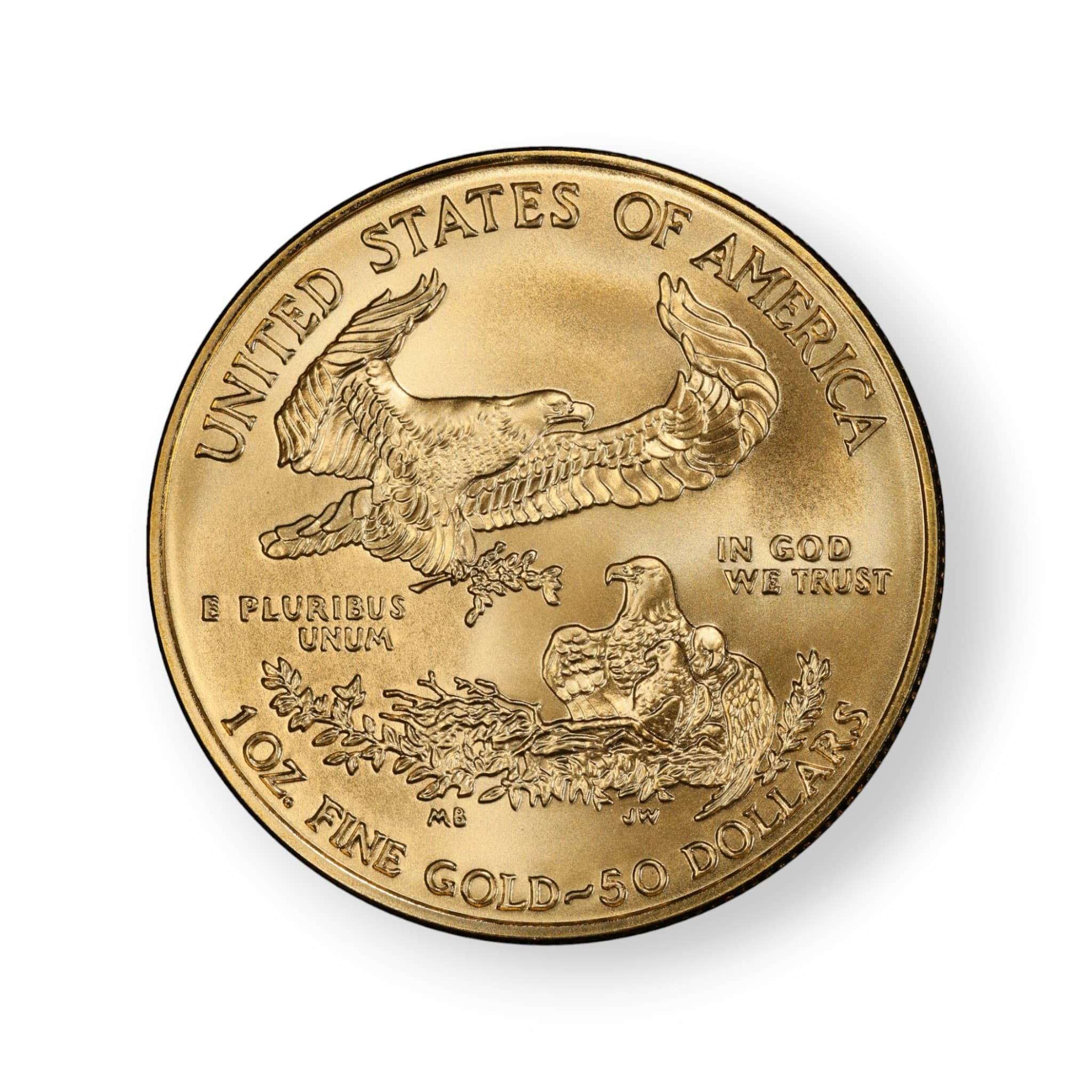
Bullion coins carry their weight and fineness in the design. The law that authorizes the 1 oz American Buffalo went as far as saying where: its weight and denomination are incused on the "grassy mound" of the reverse. Bars carry the refiner's name or logo, the weight, the fineness (999.9 on most gold bars) and usually a serial number. Small bars often come sealed in an assay card with that serial printed on it, and the two should match.
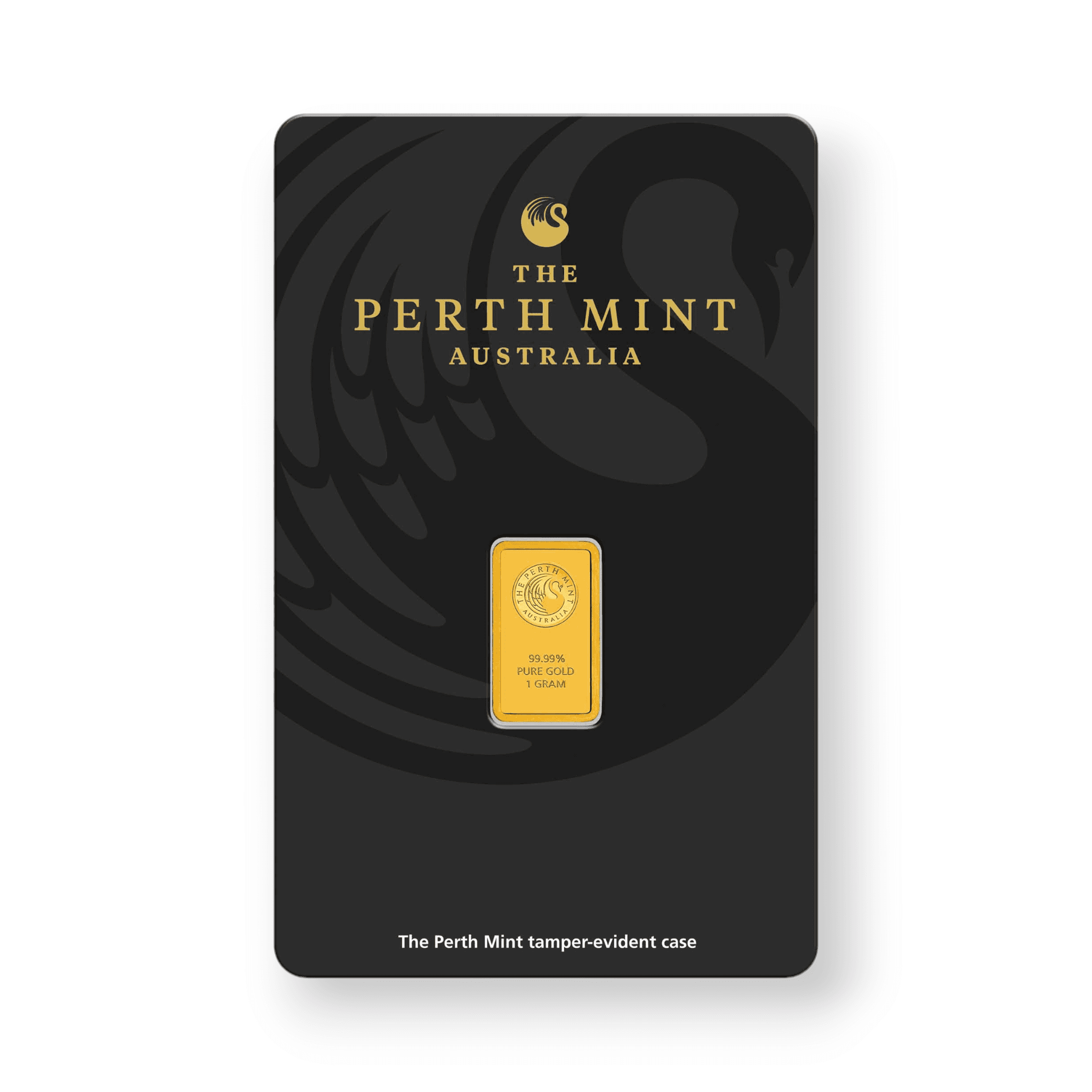
On a bar, the stamp is the easiest part to copy, so treat a perfect stamp as the minimum.
The opposite mark is worth a look too. Under the Hobby Protection Act, an imitation coin made in, imported into or sold in the US has to be plainly and permanently marked "copy". Tribute copies usually carry it in small letters. Its absence proves nothing, since a fake made to deceive simply leaves it off.
Signs of fake gold you can see without tools
The visual signs are color showing through at worn spots, flaking, soft detail on coins and marks on your skin.
Look where wear happens. Edges, corners, the high points of a coin's design and the inside of a ring or clasp are where plating rubs through first, and a different color underneath (silvery, coppery, gray) ends the discussion. Flaking, bubbling or a finish that looks painted on are the same story.
On coins, compare it to a genuine example of the same year and type, in hand or in a sharp photo. Fakes tend to go soft in the fine details: lettering that looks melted at the edges, a grainy field where the real coin is smooth, a portrait that's slightly off. A green or black mark on your skin points to base metal near the surface, though low-karat gold can do that too.
How to tell if a gold chain, necklace or ring is real
Jewelry hides its stamp. On a chain or necklace, look on the clasp or on the small tag next to it; on a ring, look inside the band. A loupe helps. The marks are tiny and wear down over years.
Most of the tests in this post still apply, with two adjustments. Test the magnet on the links and the clasp separately, since a steel spring inside the clasp can pull on a real gold chain. And check wear where the piece rubs: the back of a pendant bail, the inside of a ring, the links nearest the clasp.
Density is the weak spot. A light chain or ring doesn't displace enough water for a kitchen scale, and low-karat alloys land close to lead, as the density section below shows. When a piece has no stamp and you still want to know how to tell if something is real gold, a jeweler's acid test on an inconspicuous spot is the usual next step, and it takes a few minutes.
Is gold magnetic? What the magnet test proves
Gold isn't magnetic. Hold a strong neodymium magnet against it. If it grabs, there's iron, nickel or steel inside, and that's a fail.
The catch is that most fake-gold metals ignore a magnet too. Brass doesn't stick. Neither do copper, lead, silver or tungsten. That makes it a one-way test: a pull means fake, and no pull means you've ruled out steel, nothing more. On jewelry, check the clasp separately, since clasp springs are often steel on a real gold chain.
Weigh and measure a gold coin against its official spec
This is the best free test for coins, and the numbers come straight from 31 U.S.C. § 5112, the statute that defines US coinage:
Coin | Fine gold | Total weight | Diameter |
|---|---|---|---|
1 oz American Gold Eagle ($50) | 1 troy oz | 33.931 g | 32.7 mm |
1/2 oz Gold Eagle ($25) | 1/2 troy oz | 16.966 g | 27.0 mm |
1/4 oz Gold Eagle ($10) | 1/4 troy oz | 8.483 g | 22.0 mm |
1/10 oz Gold Eagle ($5) | 1/10 troy oz | 3.393 g | 16.5 mm |
1 oz American Buffalo ($50) | 99.99% gold | 31.10 g | set by the Mint |
Why does a "one ounce" Eagle weigh 33.931 grams? A troy ounce is 31.1035 grams, and the Eagle is 22 karat: 31.1035 ÷ 33.931 = 0.9167, which is 22/24. The rest is alloy that makes the coin harder. The Buffalo is 24 karat, so it weighs the troy ounce itself, 31.10 grams. (Our Maple Leaf vs. Gold Eagle comparison goes further into 22K vs. 24K.)
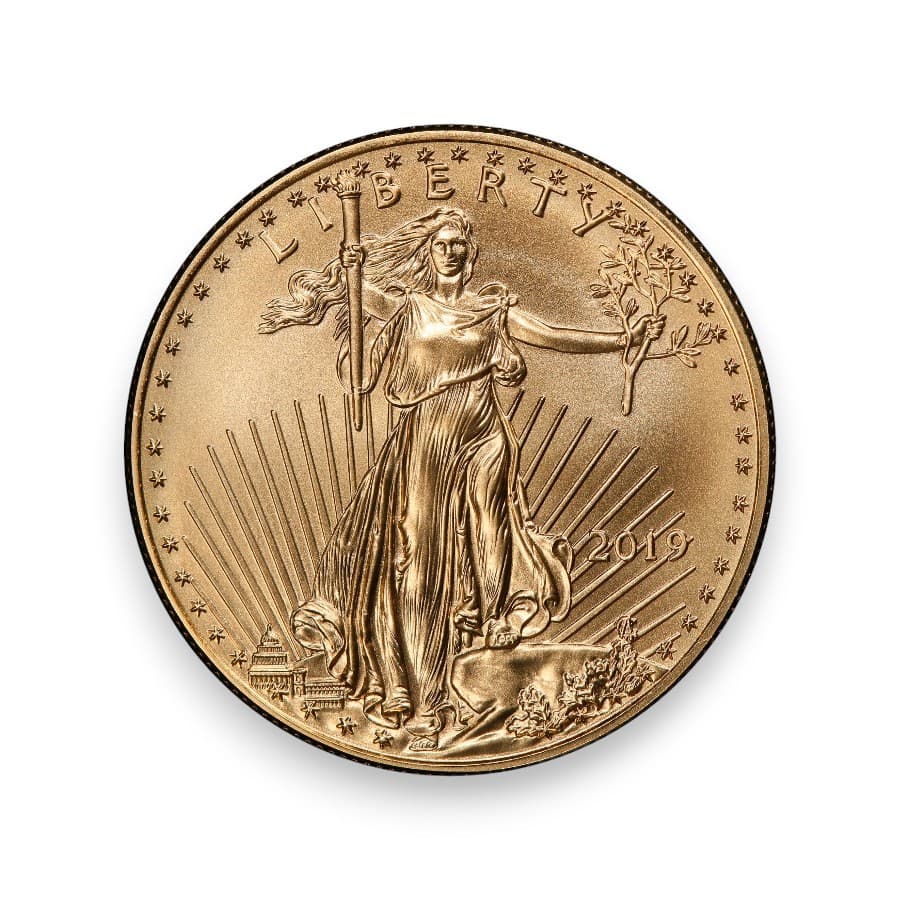
You need a scale that reads to 0.01 g and a set of digital calipers, neither of them expensive. A reading a hundredth or two off is the scale. A full gram off is a problem. The logic is simple: a brass or lead copy made at the right diameter comes in light, and one made to the right weight comes out too thick or too wide. Bars work the same way against the weight on their stamp; our guide to gold bar weights lists the standard sizes.
Tungsten is the exception.
Test gold density at home with water and a scale
Density catches fakes that are the right weight but the wrong metal. The method is Archimedes', done with kitchen gear:
Weigh the coin or bar dry and write it down.
Set a cup of water on the scale and tare it to zero.
Hang it from a thread, fully underwater and not touching the sides or bottom.
The new reading, in grams, is its volume in cubic centimeters (water is close enough to 1 g per cm³ at room temperature).
Divide the dry weight by that reading.
A 1 oz Buffalo should read about 1.61 g in step 4, and 31.10 ÷ 1.61 = 19.3. Even with the scale off by 0.01 g either way, you land between 19.2 and 19.4. An Eagle's step-4 reading is about 1.88 to 1.93 g, and its result comes out lower, 17.6 to 18.0, because its 8.33% alloy is lighter than gold: at 19.3 for gold and 8.96 for copper the math gives 17.6, and with silver's 10.5 it gives 18.0.
Now compare the usual fakes, using the Royal Society of Chemistry's figures. Copper is 8.96. Silver, 10.5. Lead, 11.3. On a 1 oz coin or bar, all of them fall far outside gold's range, and a water test catches every one.
Then there's tungsten: 19.3. The same number as gold.
Small pieces are a different story. A 1/10 oz Eagle weighs 3.393 g and displaces only about 0.19 g of water. At that size a 0.01 g error on the scale swings the result anywhere from about 17.0 to 18.9. Jewelry is harder still: karat gold isn't one density. Run the same alloy math with the non-gold part as copper at one end and silver at the other and you get roughly:
10K: 11.5 to 13.0
14K: 13.0 to 14.3
18K: 15.0 to 16.0
22K: 17.6 to 18.0
24K: 19.3
A 10K or 14K reading sits close to lead's 11.3, and stones, clasps and hollow links pull it further off. For most jewelry, the water test won't settle anything.
The ping test for gold coins
The ping test works by comparison: it tells you something only when you have a genuine coin of the same type and size to tap the same way. Balance each coin on your fingertip and tap its edge lightly with a pen or pencil. Genuine gold bullion gives a clear ring that hangs in the air for a moment, and a lot of base-metal fakes give a short, dull clink instead.
Tapping coin on coin can nick an edge, and on anything collectible it's better to skip the test. Skip it on proof coins and anything in a grading holder too. The holder muffles the sound, and tapping a proof surface can mark it.
Streak and acid tests (both damage the gold)
These are the two tests jewelers used for generations, and each one removes metal. Never use either on a coin or a bar. A scratched coin is a damaged coin, and no test result gives the metal back.
The ceramic streak test
Drag the gold firmly across unglazed ceramic, like the rough ring on the bottom of a coffee mug. Real gold leaves a gold-yellow line. A black or gray streak says something else is at the surface. It reads the outer layer and nothing deeper. Thick plating passes, and every streak grinds a little metal off.
Gold acid test kits
A gold testing kit usually holds a black touchstone and small bottles of acid rated by karat. You rub the item on the stone to leave a streak, then drop acid on the streak. Gold at or above the bottle's karat stays put; lower karat and base metal dissolve or discolor.
Most of these kits use nitric acid, which burns skin and eyes and gives off fumes. Wear gloves and eye protection, work with a window open, and keep the bottles away from kids. And the acid, like the streak, tells you about the metal it touched and nothing under it. A heavy gold layer over tungsten passes.
Why plated tungsten fakes pass most home tests
Gold-plated tungsten passes the magnet, weight, size, density, streak and acid tests because tungsten has gold's density, 19.3 g/cm³, and the surface is real gold.
Line the tests up against a gold-plated tungsten coin or bar and look at what's left. The stamp can be copied. Tungsten ignores a magnet. Its density matches gold's, which lets a counterfeiter hit the right weight and the right size at the same time. The plating is real gold, so the streak and the acid both read gold. The ping test might catch it, if your ear is good and you have a genuine coin to compare against.
That isn't a reason to panic about every bar in the world. The LBMA notes that tungsten inserts have turned up in a few small bars but never in the large bars held in central bank vaults and the London Good Delivery system. By that account the risk sits with small bars, the sizes private buyers handle.
How professionals test gold
Dealers, refiners and assay offices have instruments that read the metal's composition without harming it, and others that send sound through a bar to find what's inside. Sound travels about twice as fast through tungsten as through gold, per the LBMA, which is how professional testers catch a core. Each method has blind spots. Serious testing combines more than one.
For a coin the home tests can't settle, the American Numismatic Association is direct about it: coins made to deceive can be very hard to detect, and it's best to take the piece to an ANA-affiliated dealer for authentication.
Buying gold that has already been tested
Pure is a peer-to-peer marketplace for gold, silver, platinum, palladium and rare coins, and on a standard order the item never goes straight from the seller to you. It comes to Pure first. A Pure team member opens the package on camera and matches the item to its listing. Then we test it ourselves: the metal's exact composition, the weight and dimensions against the product's catalog spec, the holder and label on a certified coin, and the packaging and any assay card. That takes about 24 hours from check-in.
We don't publish the full list of tests. A published list is a list someone can build a fake around.
An item that clears the check ships Pure Qualified. One that doesn't never reaches the buyer: Pure notifies both sides and refunds the buyer. Shipments are insured both ways up to $125,000, and Pure Priority items are verified before they're even listed. Sellers post their own prices, and each product page shows its order book: the highest bid and lowest ask, when there are any. You can check the bids and asks on gold coins and gold bars before you commit to anything. How the Pure marketplace works walks through the rest.
The home tests above are still worth knowing for gold you already own or buy elsewhere.
Frequently asked questions
Can vinegar test gold?
Not usefully. Gold doesn't react with vinegar, but a gold-plated fake won't either, because the only metal the vinegar touches is the plating.
Can a ring be real gold if it isn't stamped?
Yes. US law doesn't require a karat stamp; it requires that a stamp, when there is one, be accurate. Older pieces, handmade work and rings that have been resized often carry no mark or a worn one. An unmarked piece isn't a fake by default, it just needs one of the other tests, and for jewelry a jeweler with testing equipment can usually tell you in a few minutes.
Does real gold tarnish?
Fine 24K gold doesn't tarnish. Karat gold can darken a little over time. The silver and copper in the alloy react with air and skin, even though the gold doesn't. Plated pieces tarnish once the plating wears through to the base metal.
Does real gold turn your skin green?
Not by itself. The green comes from copper, which reacts with sweat and skin. Low-karat gold carries enough copper to do it on some people, and a plated fake does it once the base metal underneath is exposed.
Does the lighter test work on gold?
It rules out very little. Gold doesn't darken in a lighter flame, but a thick plating won't either, and heat can crack stones and loosen solder.
Can a phone app tell if gold is real?
No. A phone camera can't see what a coin is made of. The most a phone can do is record a coin's ring, which is the ping test with a microphone, with the same need for a genuine coin to compare against. Pure's iPhone app doesn't test metal either. Pure tests every item that comes in to Pure before it ships to a buyer, and the app and collectpure.com are where you buy and sell those items.