

How Much Does a Gold Bar Weigh? All Sizes Explained
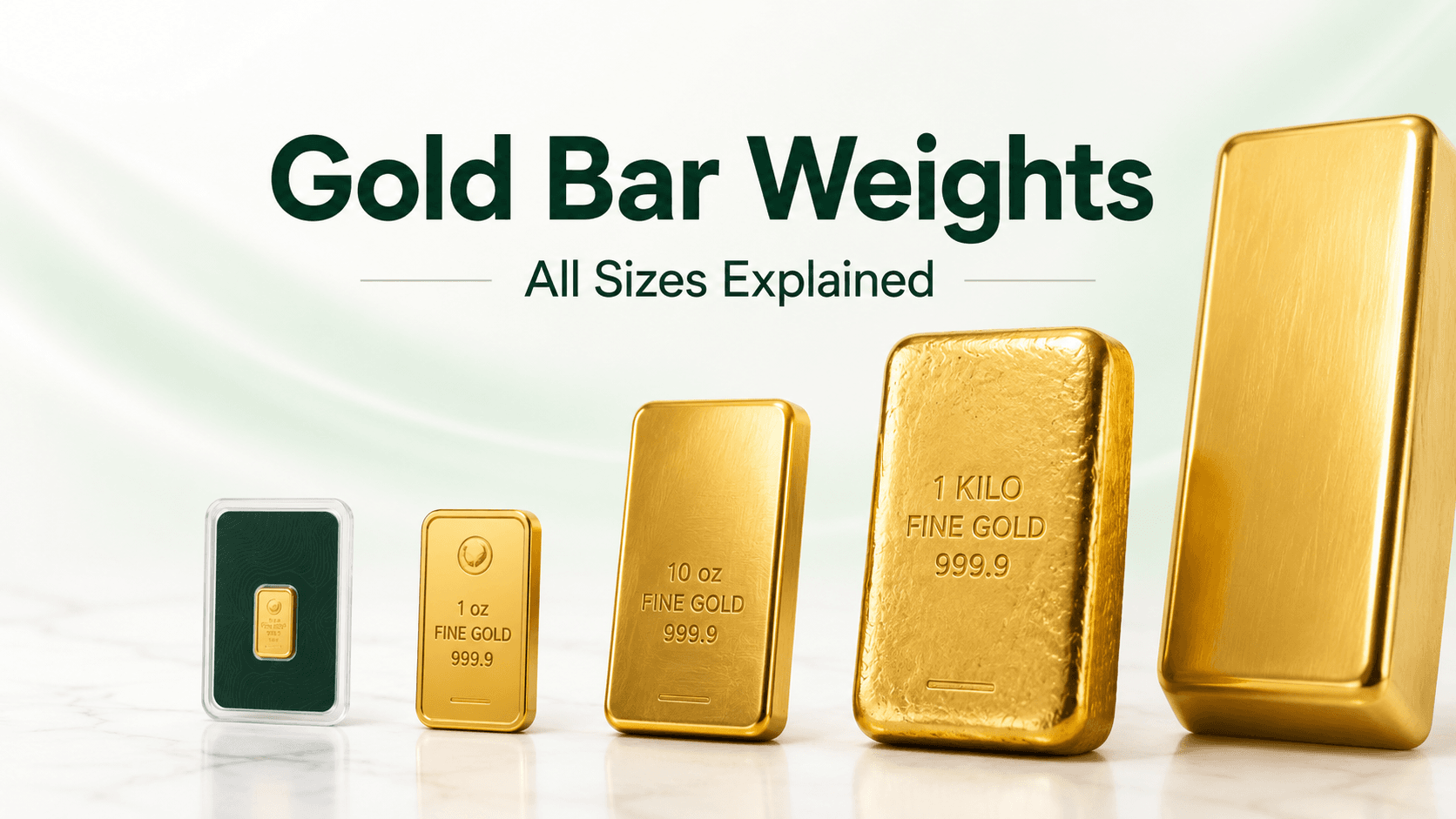

A gold bar can weigh anywhere from 1 gram to about 400 troy ounces. The big one people picture, the brick from bank vaults and movies, is that 400 ounce bar. It comes out to roughly 27 pounds, or 12.4 kilograms.
Almost nobody owns that one. The bars people actually buy are small, usually 1 ounce or less.
One thing trips everyone up at the start: gold is weighed in troy ounces, and a troy ounce is about 31.1 grams. That is not the ounce on your kitchen scale.
How much does a standard gold bar weigh?
The big bar has a name, the London Good Delivery bar, and it is what banks ship between each other. The rules let it run from 350 to 430 troy ounces, usually landing right around 400, at a minimum fineness of 995.0. Call it 27 pounds, 12.4 kilos.
At today's prices one of those holds north of a million dollars in gold, which is most of the reason you and I are never going to own one. The bars in normal hands go from a single gram up to a kilo.
Gold bar weights by size
Here is what the common sizes actually weigh.
Gold bar | Grams | Kilograms | Troy ounces | Pounds |
|---|---|---|---|---|
1 gram | 1 g | 0.001 kg | 0.032 ozt | 0.002 lb |
1 troy ounce | 31.1 g | 0.031 kg | 1 ozt | 0.069 lb |
10 troy ounce | 311 g | 0.31 kg | 10 ozt | 0.69 lb |
100 gram | 100 g | 0.1 kg | 3.22 ozt | 0.22 lb |
1 kilo | 1,000 g | 1 kg | 32.15 ozt | 2.2 lb |
400 ounce (Good Delivery) | about 12,441 g | about 12.4 kg | 400 ozt | about 27.4 lb |
There are in-between sizes too, 5, 10, 20, and 50 gram bars. A kilo bar, the biggest most private buyers go for, is about 2.2 pounds. Roughly a full water bottle.
Why gold bars use troy ounces
Precious metals run on the troy system instead of the one your groceries use. A troy ounce is about 31.1 grams. A regular ounce is about 28.35. So a bar stamped "1 ounce" is 31.1 grams, a bit heavier than the ounce you know, about 10% heavier. We broke the math down in how many grams are in an ounce if you want it. For gold, an ounce always means a troy ounce.
How much does a gold bar weigh in pounds?
Depends on the size:
A 1 troy ounce bar is about 0.069 pounds, lighter than it sounds.
A 10 ounce bar is about 0.69 pounds.
A 1 kilo bar is about 2.2 pounds.
A 400 ounce Good Delivery bar is about 27.4 pounds.
One pound of gold, for what it is worth, is about 14.6 troy ounces.
Why is a gold bar so heavy?
Gold is dense. About 19.3 grams per cubic centimeter, roughly 1.7 times as dense as lead. That is why a bar feels heavier than it looks, and why the 400 ounce bar is a lot smaller than people expect. At full LBMA spec it measures only about 250 by 70 by 35 millimeters, roughly the size of a brick, and it still tips the scale at 27 pounds. For the record, the largest gold bar ever cast weighs 250 kilograms, about 551 pounds.
That heft is also a rough authenticity check. A bar that is the right size but comes in light is not solid gold, since few cheap metals are anywhere near as dense. Weight and density are part of how a bar gets authenticated, which on Pure happens at our Los Angeles facility before anything trades.
How much is a gold bar worth?
The metal value is simple math: weight in troy ounces times the spot price, plus a premium. Say gold is around $4,000 an ounce. A 1 ounce bar is about $4,000 of gold. A kilo runs about $129,000. The 400 ounce bar, about $1.6 million. Spot moves all day, so those are snapshots, not a forecast of anything.
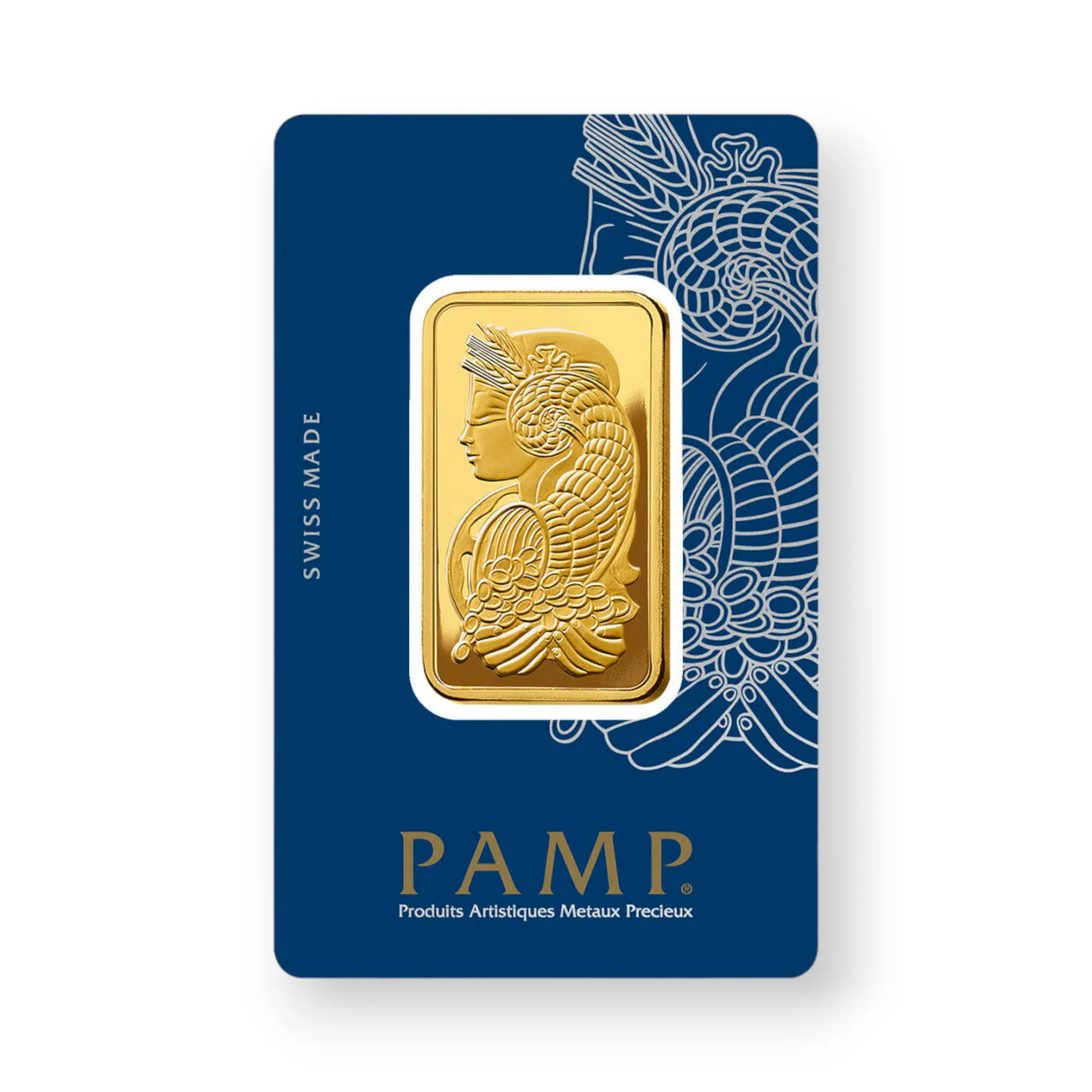
The premium is the part that swings. Small bars cost more per ounce, because the same stamping and packaging work gets spread over less metal, so a 1 gram bar carries a far bigger percentage markup than a kilo. On Pure, where bars trade on a live order book, the 1 oz PAMP Suisse Lady Fortuna bar showed an ask of 0.72% over spot on July 2, 2026, and a live bid at 0.29% over. Both sides of that market are visible before you trade. The figure moves with the bar, the refiner, and how much it is changing hands.
What size gold bar should you buy?
It comes down to your budget and how you might want to sell later.
Small bars, 1 to 50 grams, are the cheap way in, and easy to give away or sell a piece at a time. The catch is the premium per ounce. One and ten ounce bars are where most buyers land, recognized everywhere and priced sensibly. Plenty of them start life on a Costco shelf; if yours did, here is how selling a Costco gold bar works. Kilo bars give you the thinnest premium, but it is one big block, and you cannot sell half of it.
If it were me, I would rather sit on a few 1 ounce bars than one big one, just so I can peel off part of the stack later without breaking up something large. On Pure you can pull up real bars from refiners like PAMP Suisse on a live order book and check the premium on each size yourself before you buy. Every bar runs through our Los Angeles facility first, to the standard we call Pure Qualified.
FAQ
How much does a standard gold bar weigh?
The large bar banks hold is the London Good Delivery bar. It carries about 400 troy ounces of gold, roughly 27.4 pounds or 12.4 kilograms. The official rules allow 350 to 430 troy ounces per bar at a minimum fineness of 995.0.
How much does a gold bar weigh in pounds?
Depends on the size. A 1 kilo bar is about 2.2 pounds, a 10 ounce bar about 0.69 pounds, and the 400 ounce Good Delivery bar about 27.4 pounds. A single 1 ounce bar is only about 0.069 pounds.
Why are gold bars measured in troy ounces instead of regular ounces?
Precious metals use the troy system. One troy ounce is about 31.1 grams, heavier than the standard ounce of about 28.35 grams. So a "1 ounce" gold bar is really 31.1 grams.
How much is a gold bar worth?
Take the weight in troy ounces, multiply by the spot price of gold, and add a premium. If gold is near $4,000 an ounce, a 1 ounce bar holds about $4,000 of gold and a kilo about $129,000. Smaller bars carry a higher premium per ounce.
See real gold bars and their prices
Pull up gold bars across sizes on the Pure marketplace and compare the live premium on each before you buy. Want the pricing side first? Start with how the spot price works.