

What Is Britannia Silver? .958 vs .999 and Coin Value
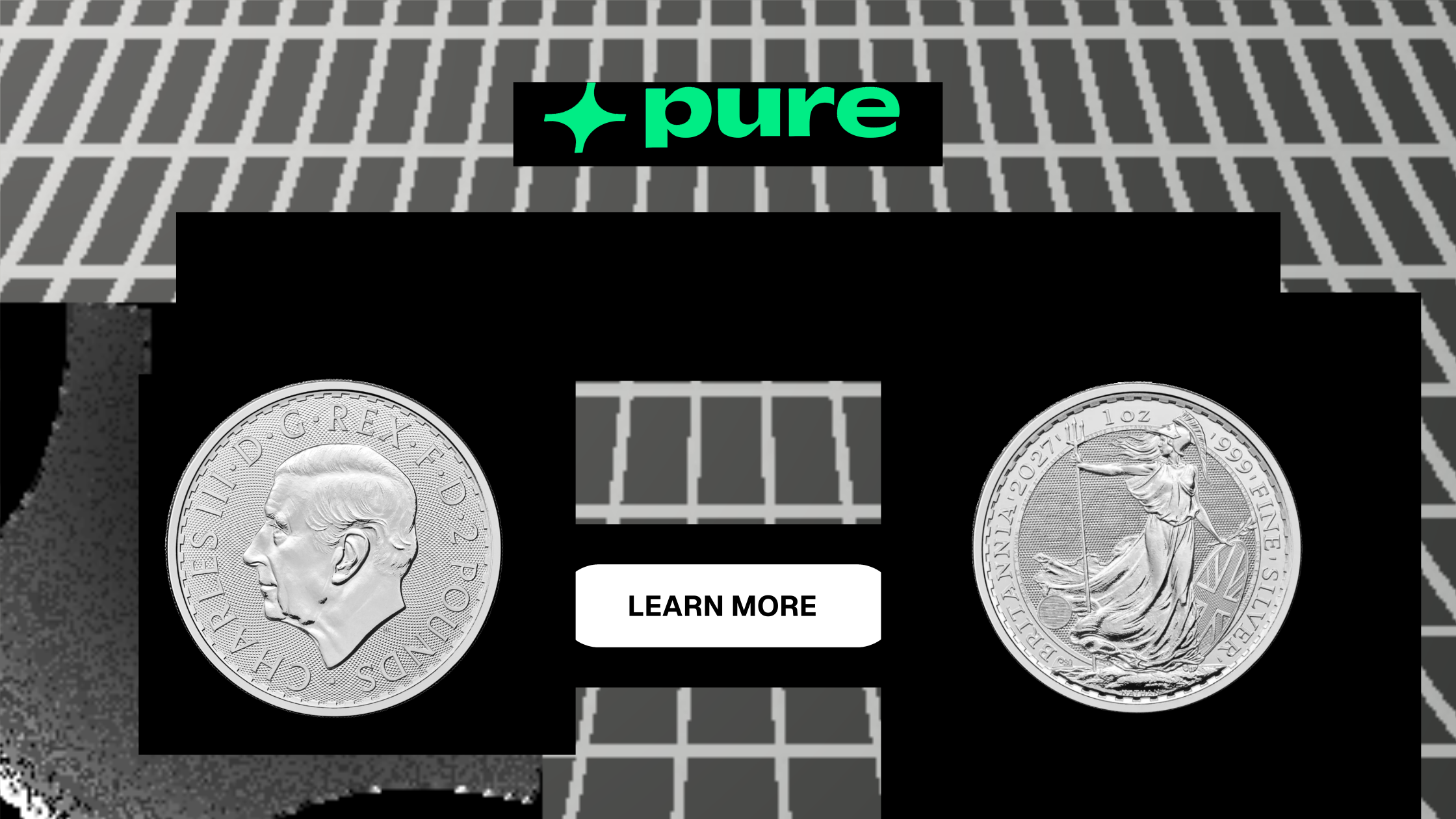

Britannia silver is a British standard of silver that is 95.8% pure, finer than the 92.5% of sterling. The same name belongs to The Royal Mint's silver bullion coin, the Britannia, which was struck in that .958 alloy from its launch in 1997 until 2012. Since 2013 the coin has been .999 fine silver, and the 1 oz size holds exactly one troy ounce of it, about 31.1 grams.
So a search for Britannia silver can mean a hallmark on a spoon or a coin in a tube. Both are covered below, the coin at more length.
The .958 standard goes back to 1697
England made Britannia silver compulsory for silversmiths in 1697. The reason was coins. Sterling coins were being clipped and melted down for their metal, and a higher legal standard for plate meant a silversmith could not simply melt a handful of shillings into a teapot. They would have had to add fine silver, which was scarce.
The trade complained that the metal was too soft. Sterling came back as a legal option on 1 June 1720, and Britannia has been an optional standard ever since.
UK law still defines both. Under the Hallmarking Act 1973, "Britannia" means silver of 958.4 parts per thousand and "sterling" means 925. A piece assayed at the higher standard carries the number 958 and may also carry a small figure of Britannia, where sterling carries the lion passant. The Assay Office London lists both marks.
One thing to watch for on old tableware: Britannia metal is not Britannia silver. It is a pewter-like alloy with no silver in it at all.
How the silver Britannia coin changed in 2013
The Royal Mint added a silver Britannia to its gold one in 1997, and for the first 16 years it used the old standard. A 1 oz coin from those years weighs 32.45 grams at .958 fine and measures 40 mm across. Multiply it out and the silver still comes to 31.09 grams, one troy ounce.
From 2013 the coin moved to .999 silver. It got lighter (31.21 g) and narrower (38.61 mm), with the same ounce of silver inside.
That makes the year the quickest check. A coin dated 2012 or earlier is .958. Anything from 2013 on is .999. The 2027 coin marks 30 years of the silver Britannia, and the Royal Mint's 2027 page gives the current spec: 1 oz of 999 fine silver, 38.61 mm, £2 face value, Philip Nathan's Britannia on the reverse and Martin Jennings' portrait of King Charles III on the obverse.
For 2027 only, the coin also carries a wave privy mark reading "30", set against a background texture of the anniversary numbers.
The portrait changed too. King Charles III first appeared on the Britannia in 2023.
Silver content by size
Every size is a set fraction of a troy ounce, so the silver content never depends on the year. Face value is the legal denomination and has nothing to do with the metal.
Size | Face value | Fine silver |
|---|---|---|
1 oz | £2 | 1 troy oz (31.10 g) |
1/2 oz | £1 | 0.5 troy oz (15.55 g) |
1/4 oz | 50p | 0.25 troy oz (7.78 g) |
1/10 oz | 20p | 0.1 troy oz (3.11 g) |
Nobody spends a £2 coin that holds a full troy ounce of silver.
What sets a silver Britannia's price
Two numbers. The first is the silver itself, called melt value: the coin's silver content in troy ounces multiplied by the spot price of silver.
Say silver is at $50 an ounce. That is a round number for the example, not a quote. The silver in each size works out to:
1 oz: $50.00
1/2 oz: $25.00
1/4 oz: $12.50
1/10 oz: $5.00
The second number is the premium, everything a coin sells for above its melt value. It covers minting, packaging and getting the coin to a buyer, and those costs barely shrink as the coin does. A tenth-ounce coin takes nearly the same handling as a full ounce, spread over a tenth of the silver, so small Britannias list at a higher premium per ounce. What a premium covers walks through the math.
A .958 coin from 2005 and a .999 coin from 2027 hold the same ounce, so their melt value is identical. Their asking prices can still differ, because on a marketplace each seller sets their own.
For the current silver price, see the silver chart. For what a specific coin costs right now, check its listing.
How to check a silver Britannia is real
Start with a scale and a pair of calipers. A 1 oz coin from 2013 on should weigh 31.21 grams and measure 38.61 mm across, and an older one 32.45 grams and 40 mm. Silver is denser than the base metals used for copies, so a fake made to the right diameter usually comes in light, and one made to the right weight comes out too thick.
Then tilt it. Since 2021 the Royal Mint has struck four security features into the Britannia, and the 1/4 oz and 1/10 oz have them as well:
a small latent image that switches between a padlock and a trident
micro-text around Britannia reading DECUS ET TUTAMEN
tincture lines, an old heraldic way of showing color in metal
a laser-made surface pattern that seems to move as the coin turns
The Mint introduced them as the world's most visually secure bullion coin.
A magnet is a fast first pass. Silver isn't magnetic, so a coin that sticks isn't silver, though one that doesn't stick can still be a fake.
None of these reads the metal itself. Pure tests every coin in house for its exact composition before it ships, which is the check a scale and a magnet can't do.
Buying and selling Britannias on Pure
Pure is a peer-to-peer marketplace. Sellers post asks and buyers post bids, and you can take an ask at its price or place a bid at your own number and wait for a seller to meet it. Only coins that pass the in-house test ship as Pure Qualified, and shipments are insured both ways up to $125,000.
The 2027 gold and silver Britannias are on one page, including the 1 oz, 1/4 oz and 1/10 oz silver coins. For any year, there is the 1 oz silver Britannia, random date.
Britannia silver FAQ
Is Britannia silver worth anything?
Yes, for the silver in it. A Britannia-standard piece is 95.8% silver, so a 100-gram hallmarked item holds 95.8 grams of pure silver, about 3.08 troy ounces. Multiply that by the silver spot price for its metal value.
Is Britannia silver more valuable than sterling silver?
It holds more silver per gram: 958 parts per thousand against sterling's 925, about 3.6% more. That is a difference in metal content only. The standard doesn't set what any particular piece sells for.
How much is a 1/10 oz silver Britannia worth?
Its melt value is a tenth of the silver spot price, since the coin holds 3.11 grams of .999 silver. The asking price adds a premium on top, which runs higher per ounce on tenth-ounce coins than on 1 oz coins.