

What Is Palladium? A Guide for Coin and Bullion Buyers
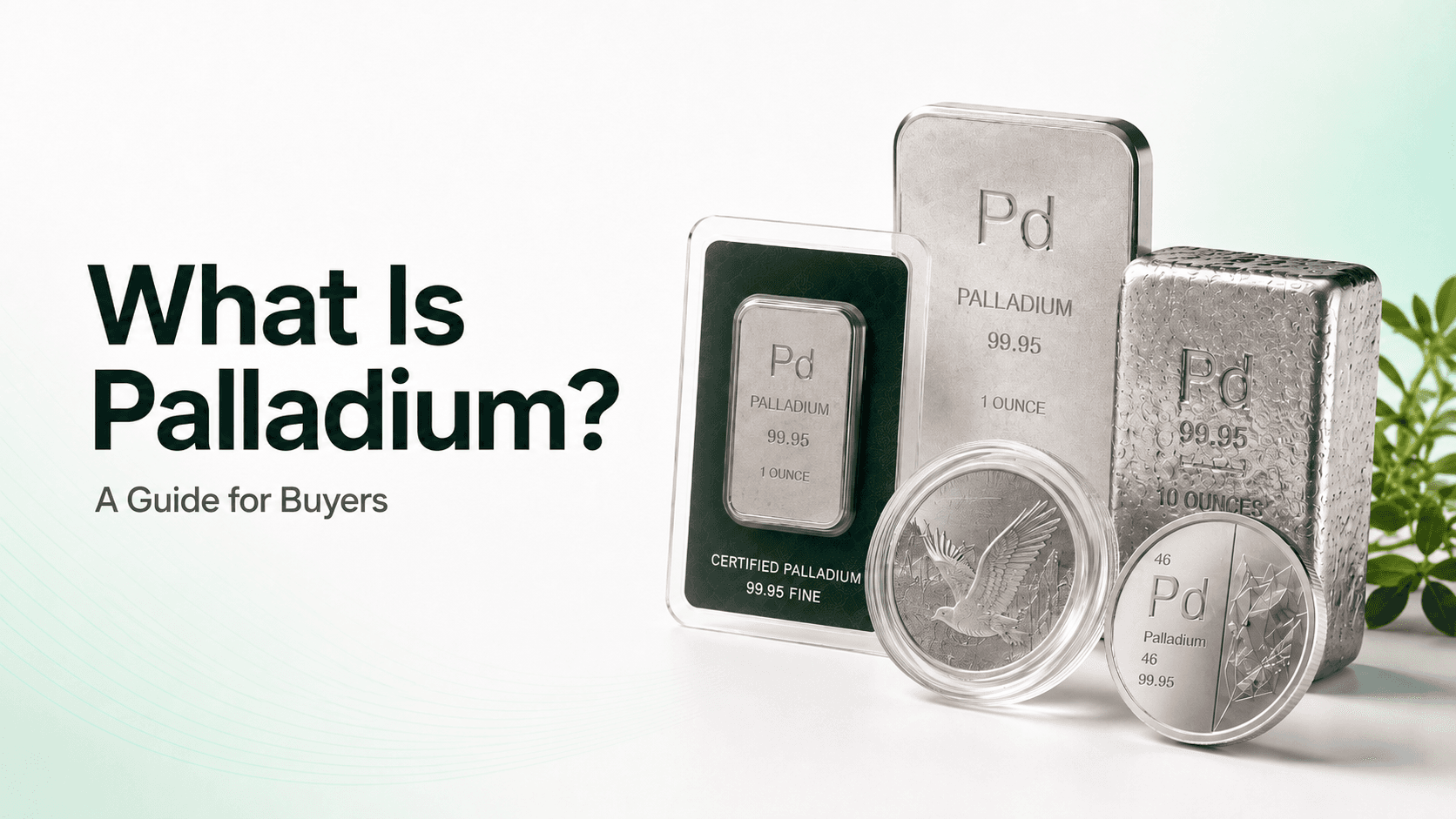

Palladium is the precious metal hiding in your car. Two to seven grams sit in the catalytic converter of nearly every gasoline vehicle, scrubbing the exhaust, and that single job drives 80 to 90% of all palladium demand. It also gets struck into coins and poured into bars, which is probably the version you came here about.
A quick bit of what-it-is: palladium is a silvery-white metal, one of the six platinum-group metals alongside platinum, rhodium, and a few you'll never need to name. Chemists first pulled it out of platinum ore back in 1803. It doesn't tarnish, it shrugs off heat, and it'll look the same in a coin tube fifty years from now as the day you bought it.
What it's actually used for
Most palladium never gets near a collector. The vast majority goes into catalytic converters, the honeycomb in a gasoline engine's exhaust that turns carbon monoxide and unburned fuel into carbon dioxide and water. One car uses just a few grams. Multiply that across the global fleet and it swamps everything else.
A much smaller share goes into jewelry (white-gold alloys, the occasional wedding band), dentistry, electronics, and a handful of chemical and hydrogen-handling uses.
Where it comes from
Two countries dig up most of the world's palladium: Russia and South Africa. Canada, the US, and Zimbabwe cover most of the rest, and almost all of it surfaces as a byproduct of nickel and platinum mining. Nobody runs a mine just for palladium.
That becomes a problem when demand climbs. Byproduct supply can't ramp on its own; you get more palladium only when miners want more nickel and platinum. So the market has come up short more years than not since 2012, and it ran a deficit again in 2024. When supply is concentrated in two countries and can't flex, a strike or an export ban shows up in the price fast.
Why the price is so jumpy
This is where palladium and gold part ways. Gold trades on fear, central banks, and its role as a store of wealth. Palladium trades on car factories. With most of its demand riding on one industry, two things hang over it: electric vehicles, which use none of it, and automakers quietly re-engineering converters to need less. And when palladium gets expensive, carmakers can swap some of it for platinum, which caps how high it climbs.
You can see all of that in the numbers. It passed gold in 2019 and finished that year near $1,900 an ounce. After Russia invaded Ukraine in 2022, supply panic shoved it past $3,000. By late 2023 it was back under $1,200.
Few things people treat as money move like that.
How you actually buy it
Two forms, same as the other metals: government coins and refiner bars.
The American Palladium Eagle is where most US buyers start. The US Mint first struck it in 2017, only 15,000 that year, one troy ounce of .9995 palladium with the old Mercury-dime Liberty on the face. Bars come from refiners in sizes from a few grams to a kilo; stick to names on the LBMA Good Delivery list and authenticity stops being something you have to worry about.
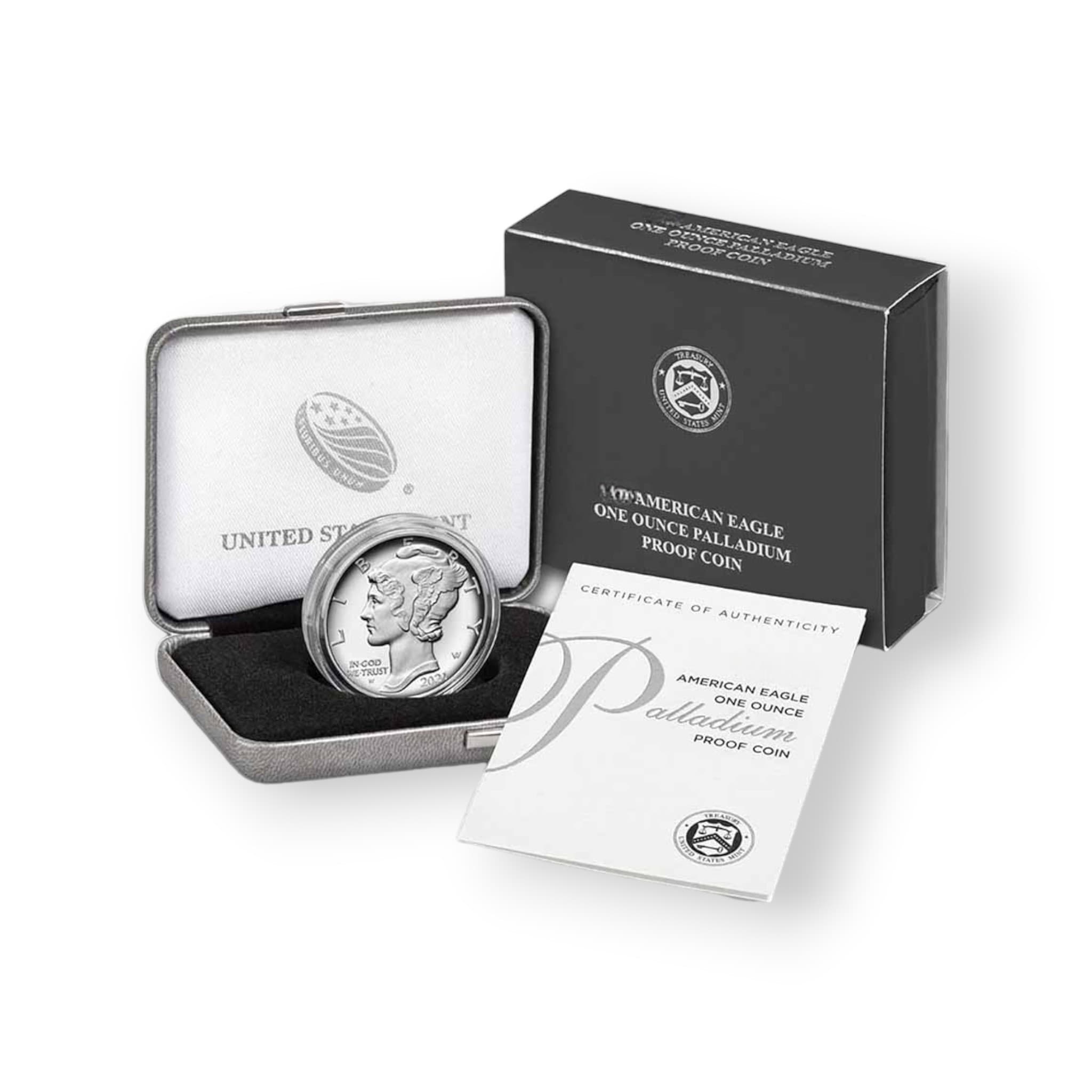
View the American Palladium Eagle on Pure →
The part that catches first-timers off guard is the premium. Far fewer palladium products get made than gold or silver ones, so you pay a wider margin over the spot price. Then you run into that same thin market again when you go to sell.
How buying palladium works on Collect Pure
Most dealers post one price and that's it. Pure runs an order book instead: every product shows live buy and sell orders, so you can set your own bid and watch the premium over spot move in real time instead of taking whatever's printed. First time buying? The concierge team will walk you through it.
"Palladium is where the order book really earns its keep. It's a thin market with wide premiums, so being able to set your own bid and see real resting orders, instead of taking a dealer's posted price, is often the difference between a fair fill and overpaying."
— Aidan Schwartz, Founding Growth Marketing Lead, Collect Pure
A caveat: this is an explainer, not investment advice. Palladium is the most volatile of the major precious metals and the most tied to one industry that's slowly shrinking.
Frequently asked questions
Is palladium worth more than gold?
At times. It overtook gold in 2019, spiked above $3,000 an ounce in 2022, then slid back below both gold and platinum. They run on different drivers, so they trade places.
Palladium or platinum, what's the difference?
They're chemical cousins and look almost identical. Platinum comes in far more coins and bars and usually carries lower premiums. Palladium is scarcer in product form and swings harder.
Why are palladium premiums so high?
Far fewer palladium coins and bars get made than gold or silver ones. Thinner supply means a wider margin over spot, both when you buy and when you sell.
How is the palladium price set?
It's the global spot price plus a premium covering minting, refining, and the dealer's margin. Spot itself moves mostly on automotive demand and that tight, inflexible supply.
Ready to look at palladium?
Browse palladium coins and bars on Collect Pure, or ask the concierge team if it's your first one.