

What Is Bullion? Coins, Bars, and Rounds Explained

What Is Bullion? Coins, Bars, and Rounds Explained
If you’re getting into precious metals, one of the first terms you’ll run into is bullion. It’s a simple concept, but there are a few important distinctions that can help you make better decisions when buying, selling, or storing metals. At its core, bullion refers to physical precious metals valued primarily by their weight and purity, not by rarity or collectibility. The most common bullion metals are gold, silver, platinum, and palladium. Unlike numismatic or collectible coins, bullion products are tied closely to the current market price, often called the “spot price.”
Bullion Coins
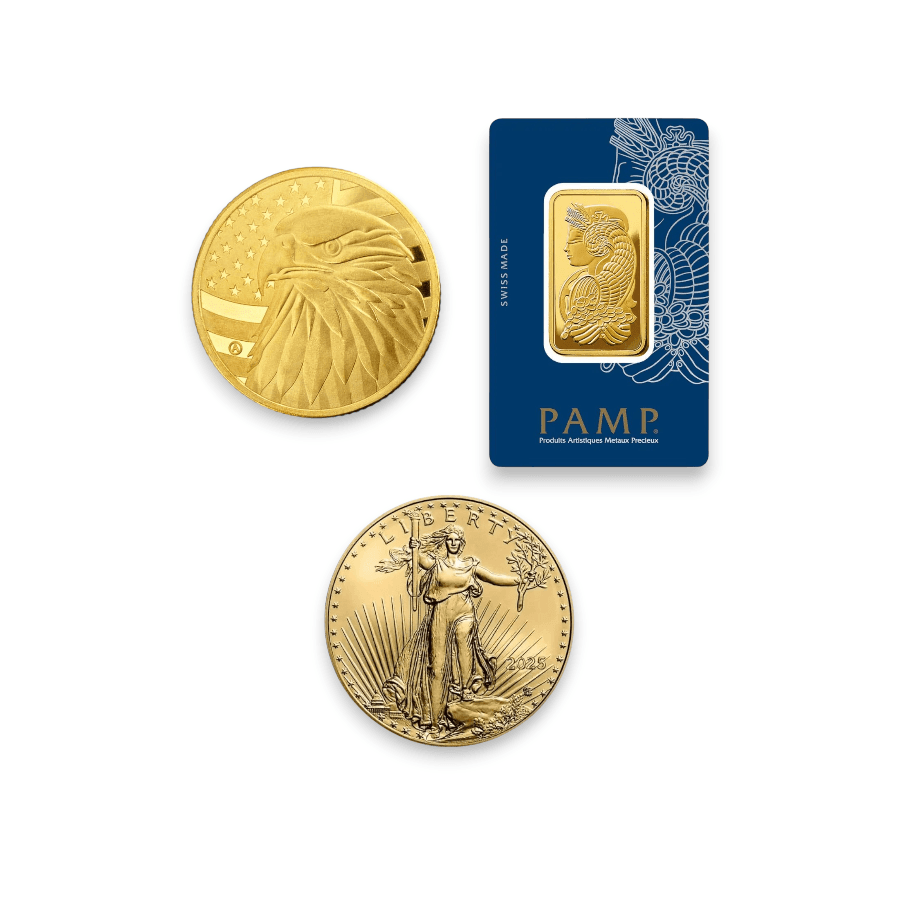
Bullion coins are government-issued and carry a face value, though that value is usually symbolic and far below the metal content. These coins are produced by official mints and are widely recognized, making them highly liquid and easy to trade.Examples include the American Gold Eagle, American Silver Eagle, and Canadian Maple Leaf.
Buyers often prefer coins for their recognizability and added trust, especially when it comes to resale. They may carry slightly higher premiums compared to bars or rounds due to minting costs and brand recognition.
Bullion Bars
Bars are a straightforward way to own precious metals. They’re typically produced by private refiners and come in a wide range of sizes, from as small as 1 gram to as large as 400 ounces for gold or 1,000 ounces for silver.
Because they are simpler to manufacture, bars often have lower premiums over spot compared to coins. Many bars come sealed in assay packaging, which verifies their weight and purity. Larger bars tend to offer better value per ounce, but they can be less flexible when it comes to selling smaller amounts.
Bullion Rounds
Rounds look similar to coins but are not issued by a government and do not have a face value. They are produced by private mints and typically feature a wide range of designs.
Rounds are often one of the most cost-effective ways to acquire precious metals, especially silver. Since they don’t carry the same recognition as government-issued coins, their premiums are usually lower. For buyers focused purely on metal content rather than brand or collectibility, rounds can be an efficient option.
Key Differences at a Glance
Coins:
Government-issued, highly recognizable, slightly higher premiums
Bars:
Produced by refiners, lower premiums, available in many sizes
Rounds:
Privately minted, coin-like appearance, typically lowest premiums
Which One Should You Choose?
The right choice depends on your goals. If you value liquidity and recognizability, coins are a strong option. If you want to maximize ounces for your money, bars or rounds may make more sense. Many buyers choose a mix to balance flexibility, cost, and ease of resale.
No matter the form, bullion offers a tangible way to own precious metals and participate in the broader market. Understanding the differences between coins, bars, and rounds is the first step toward building a strategy that fits how you want to buy, hold, and eventually sell.