

Best Place to Sell Silver Eagles: Every Option Compared

Selling a Silver Eagle usually comes down to three real choices: a local coin shop, a dealer's mail-in buyback program, or a live marketplace where the price is set by competing bids. A coin shop can have cash in your hand in ten minutes. A marketplace bid might beat that number by enough to make the wait worth it, or it might not. What actually decides it is the coin you're holding and how badly you need the money today, not whichever venue happens to be closest.
Pure runs one of the three, a live order-book marketplace, so read that section knowing we have a stake in it. The numbers on the other two don't change either way.
What Sets the Price of a Silver Eagle You're Selling
Two things decide what you'll actually be offered: the coin's finish, and whether it's raw or graded. Everything else is detail.
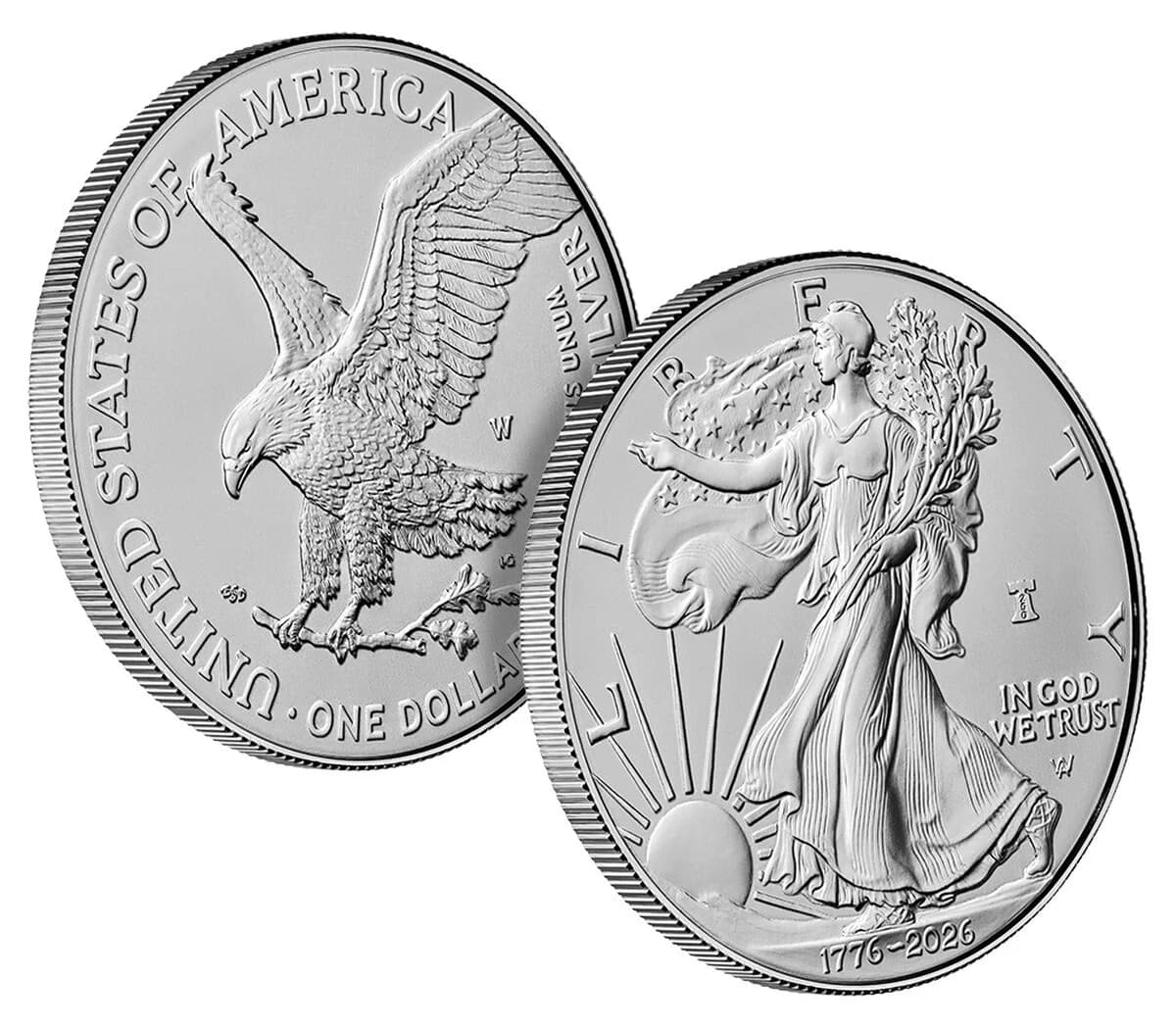
Spot silver is the floor: the live wholesale price for raw metal, times the coin's fine silver weight, one troy ounce on a standard Eagle. A plain bullion strike, minted every year with no special finish, trades close to that floor plus a modest premium. A Proof, a Burnished, or an Enhanced Uncirculated strike is priced differently. The premium on those reflects what collectors are currently paying for that specific finish, and it moves on its own, tracking the coin's own market rather than the price of silver.
Condition is the other lever.
A raw coin, never sent to a grading service, sells on its own merits: eye appeal, whether it's been handled, whether the original packaging survived. A professionally graded coin, slabbed by PCGS or NGC, carries a numeric grade that standardizes what "condition" means to a buyer who'll never hold it in hand. Grading costs money and takes time. Whether it's worth doing before you sell depends on the coin, not a blanket rule.
Know which of these you're holding before you ask anyone for a number, since "Silver Eagle" by itself isn't enough to quote accurately.
Where Can You Sell Silver Eagles? The Three Real Options
Three venues actually handle Silver Eagle sales: a local coin shop, a dealer's mail-in buyback program, or a peer-to-peer marketplace. Nobody sets the price the same way twice, and the timelines aren't close.
Local Coin Shops
Walk in, someone behind the counter looks at the coin, and you get a number right there, cash or check depending on the shop. Coin shows work the same way, just with several dealers at tables instead of one behind a counter, so you're comparing a handful of offers in an afternoon instead of driving between shops all week.
A single shop is still a single number. Unless you check two or three, you have nothing to weigh it against, and the offer reflects whatever margin that particular shop needs, which swings more than people expect.
Dealer Buyback Programs (Mail-In)
Quote, ship, get paid. That's the whole shape of it at every large online dealer running a buy-from-you program, though the quote is usually only locked for a short window, so the number you see isn't good indefinitely.
It's the option for someone who wants a firm price without leaving the house and doesn't mind a several-day wait for the check.
Peer-to-Peer Marketplaces
No single party sets the price here. Buyers and sellers post bids and asks against each other, and you can see all of them before deciding anything. On Pure, you list the coin, watch the live bids, and either take the best one or set your own ask and wait for a match. Ship it, it gets verified in our own facility, and payment goes out on its own, about three business days after check-in.
You're not getting paid today though, and that's true of any marketplace, not just this one.
What you're weighing | Local coin shop | Dealer buyback (mail-in) | Peer marketplace |
|---|---|---|---|
Who sets the price | That shop's own offer | One dealer's locked quote | Every live bid, visible before you accept |
Typical payout | Same day, often cash | A few days after receipt | About three business days after check-in |
Shipping | None | Prepaid label | Prepaid, insured |
Best fit | Fast cash, want to compare a few shops in person | A firm number without leaving home | Standard, actively traded coins where you want to see real demand |
Selling a Special-Finish Silver Eagle (Proof, Burnished, Enhanced Uncirculated)
A special-finish Silver Eagle needs a different conversation than a plain bullion strike, because most of its value beyond spot comes from the finish, not the metal.
Start with the mint mark. West Point strikes carry a W, part of what separates a Proof or Enhanced Uncirculated release from an ordinary bullion coin with no mint mark at all. Check what you actually have before assuming it's the special version; a bullion-strike Eagle listed as a rarer finish is a mismatch someone else will catch. Original Mint packaging or a certificate of authenticity is worth holding onto too, since some buyers weigh it and some don't. Beyond that, check for handling marks like you would on any coin. A rubbed or fingerprinted special finish loses more of its premium than a bullion coin would, because the finish itself is what you're being paid for.
If you're holding this year's Enhanced Uncirculated release, none of this changes. It's a special finish like the rest, priced and sold the same way.
That release sold out from the Mint in two to three minutes. I watched it happen: a number of buyers ran into checkout errors, and the Mint's new virtual waiting room drew its share of complaints, though it's a change I'm glad to see them try. A sellout that fast is exactly why a secondary market fills in within days of a launch, not months, and it's why the questions in this section matter as soon as your coin actually arrives.
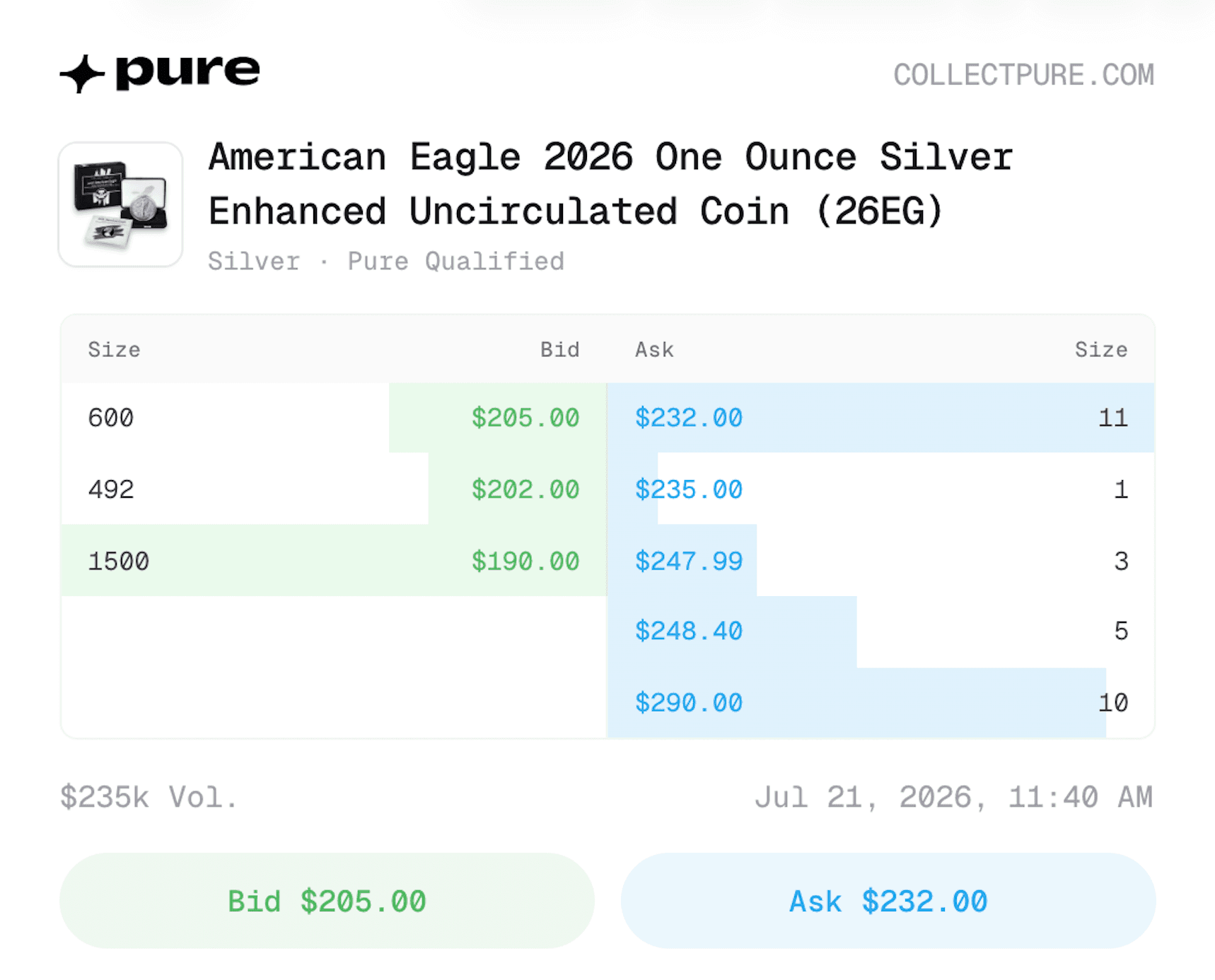
On July 21, 2026 at 11:40 AM, the highest live bid on that same coin was $205.00, with the lowest ask at $232.00, a $27 spread, against $235,000 in volume that day alone. That's what "the market sets the price" actually looks like in practice, not a single number from one buyer.
How Selling on Pure's Marketplace Works
Selling on Pure means listing against a live order book instead of taking one buyer's word for a fair price. Find your coin, look at the current bids, and either accept the best one or set your own ask and wait for a match.
Once it ships, the coin gets verified in our own facility before the sale settles, and insurance covers it both ways, up to $125,000, through FedEx. Payment is automatic. No request to file, no follow-up needed, it lands about three business days after the item checks in, by ACH or check. Fees are shown up front instead of folded into a quote, starting low for bullion and rising for numismatic and certified pieces. Check the full tier table before you sell anything valuable. The full walkthrough covers listing, pricing types, and what happens if an order gets overfilled.
You can browse current bids on Pure's silver marketplace before deciding anything, whether or not you end up listing here.
Common Questions About Selling Silver Eagles
What's the best place to sell Silver Eagles?
Whichever nets you the most after fees, once you've weighed how fast you need paid. A coin shop wins on speed and no shipping. A marketplace can be competitive on price for standard, actively traded coins, since you're seeing every bid rather than one dealer's number, but that isn't a promise it beats every offer on every coin. Get a real number from more than one venue before deciding; a single quote, from any source, is not a market.
How much can I sell my Silver Eagle for?
It depends entirely on the finish and condition described above: spot plus a premium for a bullion strike, spot plus a larger numismatic premium for a Proof, Burnished, or Enhanced Uncirculated coin, adjusted further if it's professionally graded. Check the live bids for your exact coin rather than assuming a number from a different year or finish carries over.
What are dealers actually paying for Silver Eagles?
A mail-in buyback quote reflects the same spot-plus-premium math, minus whatever margin that dealer needs to resell the coin themselves. That margin isn't usually itemized for you, so it's built into the one number you're quoted rather than shown separately.
Should I get my Silver Eagle graded before selling it?
Not automatically. Grading costs money and adds time, and it mainly pays off on a coin whose condition or rarity justifies a certified grade to a buyer who'll never hold it in hand. A common bullion-strike Eagle rarely needs it. A well-preserved special finish sometimes does.