

Best Gold Bars to Buy: Brands, Sizes, and Premiums (2026)
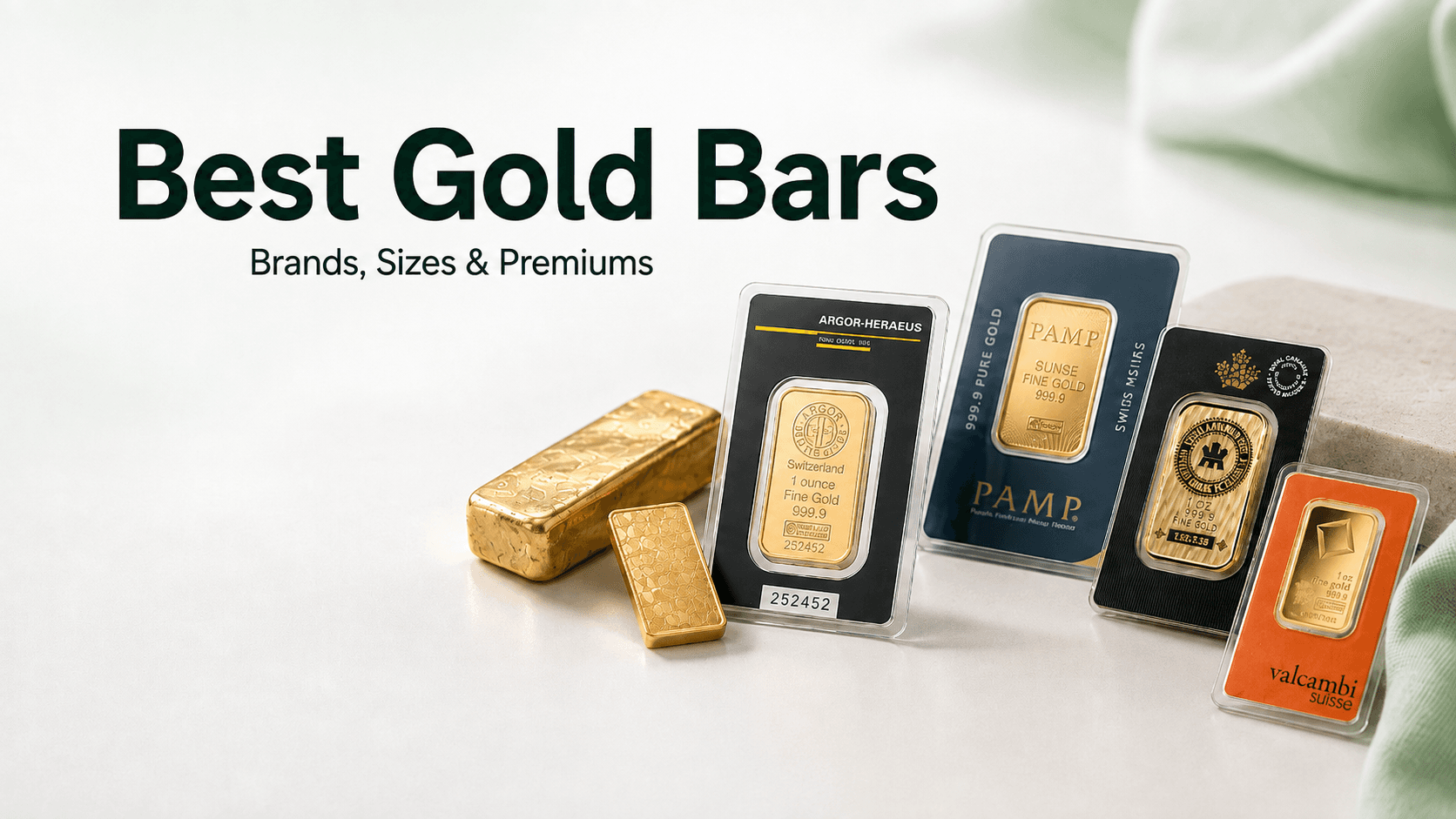

The best gold bars to buy come from refiners on the LBMA Good Delivery List, the accreditation that the world's bullion banks and vaults use to decide whose bars they will accept without question. For most buyers that shortlist comes down to a handful of names: PAMP Suisse, Rand Refinery, Argor-Heraeus, the Royal Canadian Mint, and the Perth Mint, plus Sunshine Minting for US-made rounds and bars. This guide covers what separates those brands, how bar size changes the premium you pay over spot, and how to check that the bar you receive is what it claims to be.
What Makes a Gold Bar Worth Buying
Three things matter more than the logo stamped on the front.
Accreditation. The London Bullion Market Association maintains the Good Delivery List, and refiners on it are audited for assay accuracy, sourcing, and consistency. A bar from a listed refiner is recognized by dealers and marketplaces everywhere.
Purity and weight. Modern bullion bars from the major refiners are .9999 fine (some run .999) and come in weights from 1 gram to 1 kilo. The stated weight is the gold content, not the packaging.
Assay packaging. Most 1 oz and smaller bars ship sealed in a tamper-evident card with a serial number and the assayer's signature. Keep the bar in it. An opened assay card turns a sealed, verifiable product back into a loose bar that needs re-testing.
A bar that checks these three boxes behaves like every other bar that checks them. The differences between brands after that are real but smaller than most first-time buyers expect: design, packaging format, and the premium the market charges for the name.
The Major Gold Bar Brands, Compared
Refiner | Country | Known for | Typical formats |
|---|---|---|---|
PAMP Suisse | Switzerland | Lady Fortuna design, Veriscan verification | 1 g to 1 kilo, carded assay |
Rand Refinery | South Africa | Plainer bars at lower premiums than the Swiss names | 1 oz cast and minted bars |
Argor-Heraeus | Switzerland | Kinebar holographic security feature | 1 g to 1 kilo, carded assay |
Royal Canadian Mint | Canada | .9999 government mint bars, serialized | 1 oz and 10 oz |
Perth Mint | Australia | Government-owned, green assay cards | 1 g to 10 oz |
Sunshine Minting | United States | MintMark SI anti-counterfeit feature; LBMA accredited for silver | 1 oz rounds and bars |
PAMP Suisse
PAMP is the brand most buyers meet first. The Lady Fortuna design has run for decades, the bars ship in sealed assay cards, and PAMP's Veriscan system lets the refiner verify a bar from the microscopic texture of its own surface. The market knows all of this, and PAMP bars usually carry a somewhat higher premium than generic LBMA bars of the same weight.
Rand Refinery
Rand Refinery is the major South African refiner on the list. Its 1 oz bars are a frequent answer to "PAMP is nice, but what costs less?" The bars are LBMA accredited and widely recognized; the packaging and design are plainer than the Swiss brands.
Argor-Heraeus
Argor-Heraeus sits in the same Swiss tier as PAMP. Its distinctive product is the Kinebar, which carries a holographic layer on the reverse as an anti-counterfeit feature. Premiums usually sit in the same range as PAMP's.
Royal Canadian Mint
The RCM is a government mint rather than a private refiner, and its bars are .9999 fine and serialized. Its 1 oz bars are widely stocked by North American dealers.
Perth Mint
Also government-owned, Perth Mint bars ship in green assay cards and are a staple in Pacific and US markets alike.
Sunshine Minting
Sunshine is the major US private mint on this list. One distinction worth knowing: its LBMA Good Delivery accreditation is for silver, not gold, so its gold bars trade on the mint's reputation rather than the gold list. Its bars and rounds carry the MintMark SI feature, a small engraved seal readable with a decoder lens. Sunshine also strikes rounds for other brands, including the 250th anniversary silver rounds that trade on Pure.
PAMP vs Rand Refinery: What Actually Differs
This is the comparison people search, so here is the honest version. Both are LBMA accredited, both produce .9999 fine 1 oz bars, and both are accepted anywhere bullion trades. The differences:
Premium. PAMP usually costs more per ounce over spot. That gap is the price of the design and the brand, not extra gold.
Packaging and security. PAMP's Veriscan and Argor's Kinebar are refiner-level verification systems. Rand Refinery bars rely on the standard assay card.
Design. Lady Fortuna versus a plain stamped bar. Whether that matters is entirely up to you.
The gold content is identical. Choosing between them is a preference call, and neither choice needs defending.
Bar Sizes and Premiums: From 1 Gram to 1 Kilo
Premium is the amount you pay above the metal's live spot price, and it scales inversely with bar size. Minting, assaying, and packaging cost roughly the same whether the bar weighs 1 gram or 1 ounce, so those fixed costs are a large share of a small bar's price and a small share of a big one's. A 1 gram bar can carry a premium several times higher, per ounce, than a 1 oz bar from the same refiner. How much a bar weighs and what it is worth both have full breakdowns by size.
The practical takeaway: larger bars keep more of each dollar in metal. The trade-off is flexibility, since a kilo bar cannot be split, and plenty of buyers want smaller units on purpose.
Cast vs Minted Bars
Cast bars are poured into a mold, carry a rougher finish, and cost slightly less to produce. Minted bars are cut from a rolled strip and struck with dies, which gives the clean mirror finish you see in assay cards. Both contain exactly what they say. Cast bars tend to carry marginally lower premiums; minted bars come sealed with serial numbers more often. Neither is a wrong answer.
How to Verify a Gold Bar
Buying a recognized brand narrows the counterfeit risk; it does not remove it, because well-known brands are exactly what counterfeiters copy. What verification looks like in practice:
Keep assay packaging sealed. The serial number on the card should match the bar.
Check weight and dimensions. Gold's density is hard to fake. A bar of the right dimensions and the wrong weight, or vice versa, fails immediately.
Buy where testing happens. On Pure, we test every item ourselves before it ships to you. We test the metal's exact composition on each precious metal item, and items that clear our verification check ship Pure Qualified. That check runs on every bar that trades, regardless of brand.
Where to Buy Gold Bars
Dealers, mints, and marketplaces all sell the brands above; comparing premiums and fees across them is worth ten minutes before any purchase. On Pure, the gold bars page shows live bids and asks for verified bars, so the price you see is what the market is actually paying. How the marketplace works covers the mechanics.
FAQ
Is PAMP worth the premium over a generic bar?
The gold content is the same, so the extra premium buys the design, the assay packaging, and Veriscan verification. Some buyers value that; others prefer more metal per dollar from a plainer LBMA refiner. Both are reasonable.
What is the LBMA Good Delivery List?
It is the London Bullion Market Association's register of refiners whose bars meet its standards for assay accuracy, weight, and responsible sourcing. The current list is public. Bars from listed refiners are the default standard in the bullion trade.
Do gold bars come with certificates?
Most modern 1 oz and smaller bars come sealed in an assay card that doubles as the certificate: it carries the weight, purity, serial number, and assayer signature. Larger cast bars often come with a separate paper assay certificate instead.